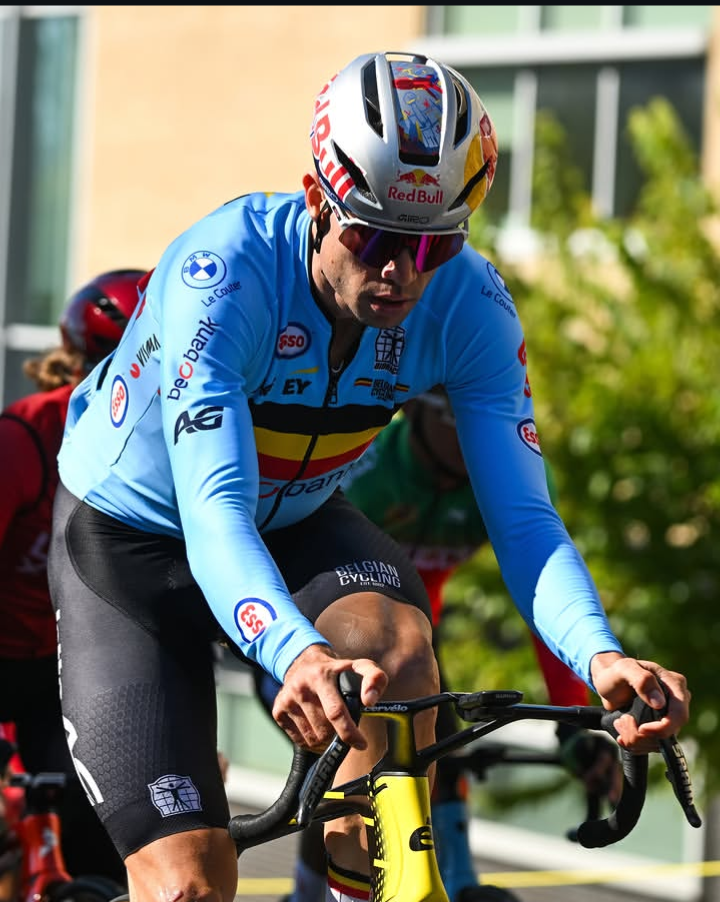
Wout van Aert has officially arrived in Montréal, and the Belgian superstar now has his attention firmly fixed on one of the biggest challenges still remaining on his 2026 calendar.
After an impressive Vuelta a España campaign, Van Aert enters the World Championships with renewed confidence. His performances in Spain once again demonstrated the qualities that have made him such a unique rider: he can sprint, climb, attack, ride aggressively in difficult conditions and contribute to a team’s tactical plan when the race enters its most important phase.
Related posts


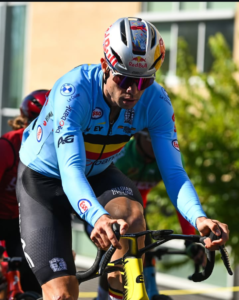
But Montréal is a different battlefield.
The World Championships do not simply reward riders with the strongest legs. Positioning, timing, teamwork and the ability to read the race could prove just as important. The demanding course is expected to create opportunities for attacks, and Belgium will have to make crucial decisions as the race develops.
That makes Van Aert’s role particularly interesting.
Belgium has more than one option available, meaning the team does not necessarily have to commit everything to a single strategy from the opening kilometres. Instead, the race could force the Belgian riders to react to attacks from rival nations before deciding exactly when Van Aert should take centre stage.
And that is where the warning surrounding Sunday’s race becomes important.
Van Aert cannot afford to waste energy too early. The Montréal course has the potential to turn the final part of the race into a battle of attrition, with riders who have spent too much energy earlier potentially paying the price when the decisive attacks arrive.
The Belgian team therefore faces a delicate balancing act.
Do they allow other nations to control the race? Do they send a rider up the road early? Do they protect Van Aert for the final kilometres? Or could the race situation force the Belgian star to attack much earlier than expected?
Those questions may not have answers until the race itself begins.
Van Aert’s recent Vuelta form, however, gives Belgium plenty of reasons to believe he can play a major role. His ability to survive difficult stages while still maintaining the speed required for the finale makes him particularly difficult for rival teams to ignore.
There is also the psychological element.
A strong performance in the Vuelta can provide momentum, but the World Championships are an entirely different pressure environment. There is no regular team classification to fall back on and no opportunity to simply target another stage the following day. Everything eventually comes down to one race, one finish and one opportunity to get the tactics right.
For Van Aert, Montréal therefore represents more than just another race on the calendar.
It is another chance to turn his experience, versatility and recent form into a memorable World Championships performance.
Belgian coach Serge Pauwels and the rest of the team will have to make difficult decisions throughout the race, particularly if the favourites begin attacking from distance. Every move could change the tactical picture, and Belgium will need to ensure that Van Aert still has something left when the race reaches its decisive phase.
The Belgian star has already shown that he can deliver when the pressure is high.
Now Montréal presents another test.
The crowds will be watching. The strongest nations will be waiting. And somewhere inside the Belgian camp, the strategy for the final kilometres is already taking shape.
The big question is no longer simply whether Wout van Aert has the form to compete.
It is what Belgium will ask him to do when the race reaches its most dangerous moment.
Will he wait patiently for the perfect opportunity? Will he follow the decisive attack? Could Belgium use its depth to create the opening Van Aert needs?
Nobody knows exactly how Sunday’s race will unfold.
But one thing is certain: when the World Championships reach the moment that matters most, all eyes will once again turn toward Wout van Aert.
And Montréal may have one final twist waiting for him…