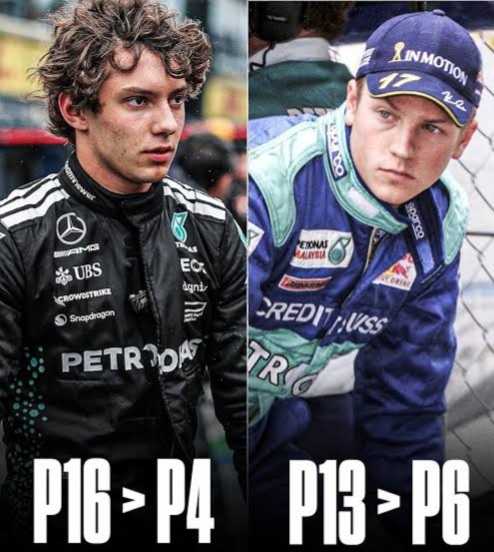
Two drivers. Two eras. One name that refuses to fade from Formula 1 conversations — Kimi. On one side stands Räikkönen, the Finnish “Iceman” who carved his legacy through patience, precision, and a slow-burning rise that eventually led to a world championship. On the other side is Antonelli, the teenage sensation from Italy, already being thrown into the spotlight as one of the most promising modern talents the sport has ever seen.
Räikkönen’s early career was defined by steady progress. When he arrived in Formula 1 in 2001, he was raw but clearly special. There were flashes of brilliance, but no immediate dominance — just a driver learning, adapting, and building toward greatness over time. His first win came two seasons later, and his true peak arrived years after his debut, proving that his path was one of long-term development rather than instant success.
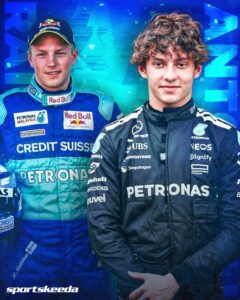
What makes the comparison so compelling is not just the numbers, but the contrast in eras. Räikkönen raced in a time where experience was earned over years of testing and gradual development. Antonelli, meanwhile, has entered a world of simulators, data systems, and highly optimized junior programs — accelerating the learning curve dramatically. The result is two drivers who reached Formula 1 through completely different routes, yet both immediately drew attention for their natural speed.
Still, the question remains unanswered: is Antonelli truly redefining what a rookie can achieve in modern Formula 1, or does Räikkönen’s long, methodical rise still represent the more complete blueprint for success? One thing is certain — both drivers prove that elite talent reveals itself early, even if it takes different paths to reach the top.
Related posts


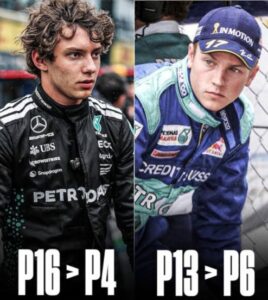 Adding to the intrigue is how both drivers handle pressure. Räikkönen became famous for his calm, almost detached personality under the spotlight, rarely showing emotion even in the most intense moments. Antonelli, while still early in his career, is already showing signs of similar composure — a quiet focus that allows him to perform without being overwhelmed by expectation, even when racing against seasoned champions.
As the debate continues to grow across the paddock and among fans, another layer emerges: the role of modern Formula 1 machinery. Today’s cars are more complex, more data-driven, and arguably more demanding in terms of precision. This raises the question of whether Antonelli’s rapid adaptation is even more impressive in context, or whether Räikkönen’s achievements in a less forgiving development environment hold the stronger weight when adjusted for era.