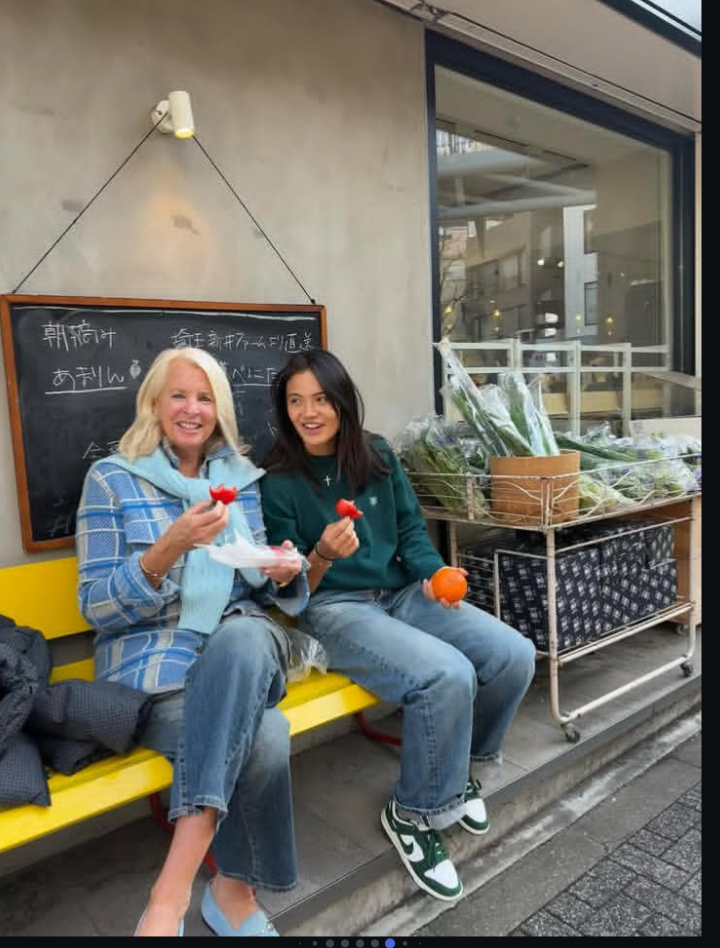
Emma Raducanu has once again set social media buzzing after describing Tokyo as her “new home,” a simple remark that quickly took on a life of its own among fans and tennis observers. The comment, shared in a relaxed and almost offhand way, has fueled widespread curiosity about what the British star really meant—and whether there is a deeper story behind her connection to the Japanese capital.

Raducanu, who continues to balance life on the WTA Tour with the pressures of global attention, has always been known for her thoughtful and sometimes understated way of speaking about places she visits. Tokyo, however, appears to have left a particularly strong impression on her. The city’s unique blend of calm order, vibrant energy, and deep sporting culture often stands out to athletes who compete there, and Raducanu’s remark suggests she may have felt especially at ease during her time in Japan.
Fans were quick to react, with many interpreting “new home” as more than just a casual expression. Some speculated she may be referring to her comfort level in the city, her training environment, or even a sense of emotional connection formed during her stay. Others, more cautiously, believe it may simply reflect how welcome and settled she feels whenever she competes in Tokyo tournaments.
What adds to the intrigue is Raducanu’s recent career phase, where she has been focusing on rebuilding consistency, fitness, and confidence on court. In that context, any place where she feels relaxed and supported naturally becomes significant. Tokyo, with its world-class facilities, passionate crowds, and disciplined atmosphere, may have provided exactly that kind of environment for her.


Still, the phrase “home” carries a weight that fans are not ignoring. For a global athlete who spends most of the year travelling between continents, calling any city a home—even symbolically—stands out. It has led to renewed discussion about how athletes form emotional attachments to certain tournament locations, sometimes returning year after year not just for competition, but for comfort and familiarity.
As of now, Raducanu has not expanded on her comment, leaving the interpretation open. Whether it was a lighthearted expression of affection for Tokyo or a more meaningful reflection of her experience there, one thing is clear: her words have struck a chord. And once again, even a short sentence from Emma Raducanu has been enough to capture attention far beyond the tennis court.