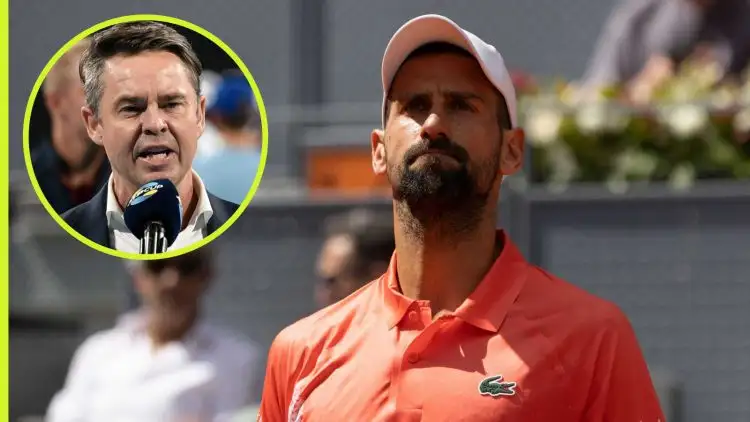
For more than a decade, Novak Djokovic has existed in a complicated relationship with the institutions that govern tennis. As one of the most dominant champions the sport has ever produced, his presence alone seems to strain the rulebook—exposing cracks that many fans believe only appear when the stakes are highest and the name on the scoresheet is too big to ignore.
From heated debates over medical timeouts to disputes around scheduling, crowd behavior, and disciplinary calls, Djokovic’s matches often feel like battlegrounds not just between players, but between principles and power. Supporters argue that he is scrutinized more harshly than his rivals, punished for his defiance, and judged through a lens shaped by public perception rather than fairness. To them, Djokovic is not protected by the system—he is challenged by it.


Critics, however, see the opposite. They claim that tennis authorities hesitate when Djokovic is involved, fearing backlash, lost revenue, or the collapse of carefully crafted narratives. In their view, his status forces officials into compromises that blur the line between enforcement and accommodation. Decisions appear delayed, softened, or inconsistently applied, feeding the belief that star power quietly reshapes the rules.
What makes Djokovic’s case so explosive is not just the outcomes, but the inconsistency surrounding them. Similar incidents involving lesser-known players often result in swift penalties or public condemnation. When Djokovic is involved, the process seems slower, louder, and more politically charged. This contrast fuels a growing sense that tennis does not operate under one unified standard, but under layers of influence.
Djokovic himself has become a symbol of resistance—unwilling to conform, unafraid to challenge authority, and unapologetic in his individuality. That defiance resonates with fans who feel the sport protects tradition more than truth. At the same time, it unsettles institutions built on control, predictability, and image.
Ultimately, this is no longer just about Novak Djokovic. It’s about what happens when a player becomes bigger than the framework designed to govern him. Tennis prides itself on integrity, yet every Djokovic controversy raises the same uncomfortable question: are the rules truly universal, or do they bend under the weight of greatness?
As long as Djokovic remains at the center of the game, tennis will continue to face its toughest test—not on the court, but in its commitment to fairness, consistency, and credibility.